

If you left crypto gains off your tax return, the reports about lower IRS disclosure penalties raise a fair question: what has actually changed?
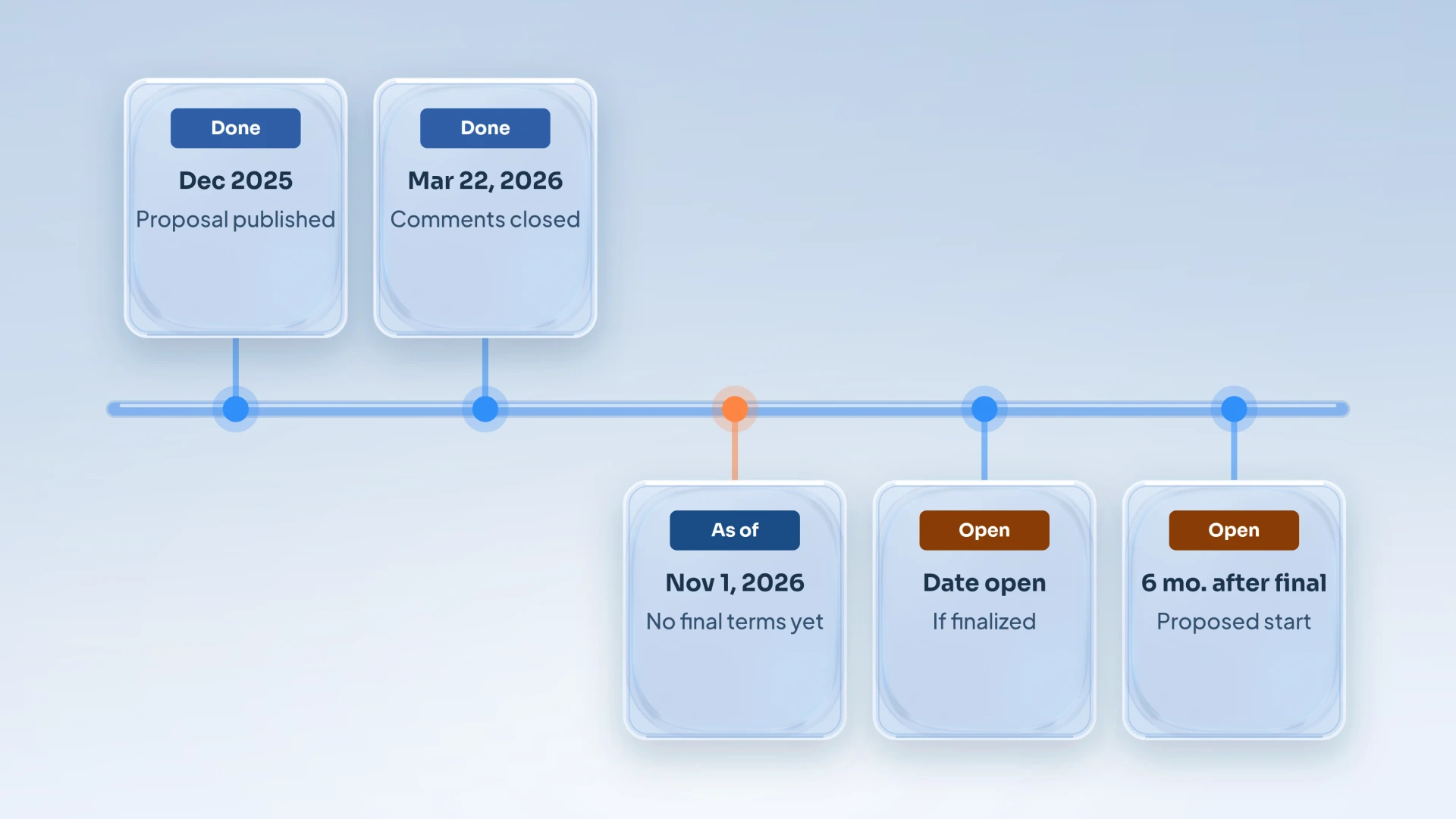
As of November 1, 2026, the IRS has only proposed changes to its Voluntary Disclosure Practice and has not adopted them. Under the December 2025 proposal, amended returns would carry a 20% accuracy-related penalty for each year of a generally six-year disclosure period. The revised procedures would take effect six months after the IRS publishes final terms. The IRS has not published such terms.
Key Takeaways
- The proposal would add a 20% accuracy-related penalty for each year of amended returns, instead of one civil fraud penalty.
- The practice covers only willful non-compliance, not accidental errors.
- A disclosure only qualifies if it is timely.
- A disclosure does not guarantee immunity from prosecution.
- Reports about timing and installment plans are unconfirmed.
What the IRS Has Proposed and the Existing Practice
The official pages on the Voluntary Disclosure Practice do not single out crypto.
What is the Voluntary Disclosure Practice?
The Voluntary Disclosure Practice is a program of IRS Criminal Investigation for taxpayers who willfully failed to report income. You come forward before the IRS opens an examination (an IRS audit) or investigation of you. You then pay the tax, interest and penalties, and the IRS may recommend against prosecution.
Under the existing practice, the IRS applies a civil fraud penalty to at least one year of every voluntary disclosure. It assesses that penalty on the year with the highest tax deficiency. The civil fraud penalty has a statutory rate of 75% of the underpayment attributable to fraud.
The proposal would change this for amended income tax returns. Instead of one fraud penalty, the IRS would charge a 20% accuracy-related penalty for each year of the disclosure period. The period generally covers the most recent six years. The IRS invited comments until March 22, 2026.
What is an accuracy-related penalty?
An accuracy-related penalty adds 20% to the part of an underpayment caused by negligence or a substantial understatement of income tax. Unlike the civil fraud penalty, it does not rest on fraud.
The table compares the existing practice with what the December 2025 proposal would change. It covers amended income tax returns only, because the proposal would set other penalties for delinquent returns and for foreign account and international information reports.
| Item | Existing practice | Proposal (would apply) |
|---|---|---|
| Penalty on amended returns | One civil fraud penalty, 75% | 20% accuracy-related penalty |
| Years penalized | One year, highest deficiency | Each year of the period |
| Payment | Full payment or full-pay installment agreement | Full payment within three months |
| Status | In force | Proposed, not final |
The IRS does not say whether the new structure costs less in total. A 20% penalty on each year of a generally six-year period is not automatically lower than a 75% penalty on one year. The result depends on your own numbers.
Who Qualifies: Willful Non-Compliance Only
The practice is designed for willful non-compliance. If your disclosure narrative only describes negligence or carelessness, the IRS denies the clearance request.
What does willful mean?
Willful non-compliance means an intentional, deliberate act to hide income or assets and so avoid filing or paying tax. Accidental errors, such as a forgotten transaction, are the kind of mistake the practice excludes.
For accidental errors, the IRS names amended or past-due returns as one option among others. Whether your own case counts as willful depends on the facts. A tax attorney or CPA is the right contact before any disclosure.
A disclosure does not automatically guarantee immunity from prosecution. Under the proposal, fully compliant taxpayers would not be recommended for criminal prosecution. The IRS's own FAQ on the proposal says these taxpayers may avoid prosecution. Taxpayers who do not comply could face a full examination and all applicable civil and criminal penalties.
Timing and Steps: Why Waiting Can Cost You Eligibility
A disclosure only qualifies if it is timely.
What does timely mean?
A disclosure is timely only if the IRS has not yet opened an examination or investigation of you. Once the IRS has notified you of its intent to open one, the disclosure is no longer timely and does not qualify.
Information that a third party, such as an informant, another government agency or the media, gives the IRS about your non-compliance also makes a disclosure untimely. So does information about your non-compliance from an enforcement action, such as a search warrant or summons. Income from illegal sources is not eligible.
For crypto holders, this is where Form 1099-DA matters. Brokers report gross proceeds for digital asset transactions on or after January 1, 2025, and basis on certain transactions on or after January 1, 2026. The final regulations do not cover decentralized or non-custodial brokers.
The IRS has not said how this broker data affects the timeliness test. In our assessment, waiting carries a risk, because the IRS may already hold third-party information about your trades.
Under the existing practice, you first submit a preclearance request on Form 14457, and IRS Criminal Investigation checks whether you are eligible to apply. Preclearance does not guarantee preliminary acceptance. After preclearance, you submit the application within 45 days, and the IRS may extend that period once by another 45 days. Criminal Investigation then decides whether to grant preliminary acceptance.
Know your numbers first
CoinTracking supports 400+ exchanges, wallets, and blockchains and calculates your gains and losses from the transactions you import.
Unconfirmed Reports and a Crypto Bill in Congress
According to media reports, the IRS aims to introduce the revised program before December 2026 and to resolve cases within 120 days after a complete submission. Neither figure appears in the IRS announcement of the proposal or on the IRS Voluntary Disclosure Practice page, so treat both as unconfirmed. Even an introduction before December 2026 would not mean that the new rules apply before December 2026. The proposal would set the start six months after the final terms are published. The IRS has not said how an introduction relates to that date.
Reports also say that installment plans are under consideration. The proposal does not mention installment plans. It would require full payment within three months of conditional approval, and taxpayers who cannot pay in full would not be eligible.
As of November 1, 2026, there is no separate voluntary disclosure program for crypto. According to reports, the IRS does not plan one within its own practice. A bill in Congress, the Digital Asset Tax Certainty Act, would require the Treasury to set one up. A House committee approved the bill on September 16, 2026, but it is not law.
Rebuild Your Records Before Any Filing
Whichever route fits your case, the work starts with a complete record of your transactions. Form 1040-X corrects a return you have already filed, and a correction should rest on the right cost basis for each sale. Where purchase records are missing, you can reconstruct missing cost basis from exchange and blockchain history.
CoinTracking calculates cost basis and gains and losses from the history you import. That way, your Form 8949 reflects your actual records. If your history is large or complicated, you can also get professional help with your crypto taxes.
Conclusion
The proposed 20% penalty is worth following, but only willful non-compliance falls under this practice.
Start with a complete record
Since 2012, CoinTracking has grown to 2.2 million users, with 400+ exchanges, wallets, and blockchains supported.
Disclaimer
The information provided in this article is intended for general informational purposes only and should not be construed as financial, tax, or legal advice. This article describes a proposal for US federal voluntary disclosure procedures as of November 1, 2026, and penalty rates, eligibility rules and IRS procedures are subject to change. Readers are encouraged to conduct their own research and consult with a qualified tax attorney or tax professional about their specific situation before making decisions based on the information presented here. The author and publisher are not responsible for any losses or damages incurred as a result of using the information in this article.